Navigating the entrepreneurial maze, especially when you're a solopreneur or an early-stage startup founder, often feels like a high-stakes game with limited resources and fierce competition. You've probably read countless articles on the "right" way to build a business—from the 10-step launch plan to the daily habits of billionaires. But what if the most effective strategy isn't a one-size-fits-all formula, but one deeply tailored to you? The secret to a more fulfilling, sustainable, and effective entrepreneurial journey lies in a powerful blend: understanding your unique Personality, connecting with your core Purpose (Ikigai), and leveraging the agile, experimental principles of the Lean Startup methodology. This isn't just about working harder or following a generic playbook; it's about working smarter, in alignment with who you are and what you are uniquely positioned to offer the world.
Know Thyself: Why Your Personality is Your Startup Superpower (and Kryptonite)
Before diving into market analysis, business plans, and Minimum Viable Products (MVPs), the journey starts with radical self-awareness. Understanding your personality provides invaluable insights into your natural strengths, potential blind spots, and the tendencies that will inevitably shape your path as a founder. Your personality dictates your approach to risk, your comfort with uncertainty, how you lead, and even how you interact with your first customers. Ignoring it is like trying to drive a sports car while being unaware of its horsepower or its tendency to oversteer.
Frameworks like the Myers-Briggs Type Indicator (MBTI), the Big Five Personality Traits (Openness, Conscientiousness, Extraversion, Agreeableness, Neuroticism), and the Enneagram can be incredibly illuminating.
The Power of Personality Profiling in Entrepreneurship
MBTI for Decision-Making & Risk: Are you an intuitive risk-taker (common in some MBTI profiles like ENTPs or ENFPs) who thrives on new ideas but might struggle with implementation details? Or are you a more detail-oriented and cautious type (ISTJ or ISFJ), whose thoroughness is great for mitigating risk but might lead to analysis paralysis? Knowing whether you prefer Thinking (T) or Feeling (F) helps you recognize if you tend to make decisions based on objective logic or on values and people's impact.
Big Five for Operational Excellence: Does your Big Five profile show high Conscientiousness? This is fantastic for diligence, setting clear processes, and sticking to long-term goals. However, founders with extremely high conscientiousness must watch out for rigidity and an inability to "pivot" when the data demands it. Conversely, high Openness is fantastic for innovation and seeing market opportunities, but the founder must consciously work to maintain focus and not chase every shiny new idea. Low Neuroticism (high emotional stability) is often an undervalued entrepreneurial asset, as it allows for calm decision-making under stress.
Enneagram for Motivation and Blind Spots: The Enneagram goes deeper into core motivations and fears. Are you an Achiever (Type 3) driven by success and image, which can lead to incredible velocity but also the risk of sacrificing authenticity? A Challenger (Type 8) who leads assertively and fearlessly but might alienate collaborators? Or perhaps a Loyalist (Type 6) whose need for security and fear of uncertainty might cause crucial indecision during times of market ambiguity?
Recognizing these traits helps you anticipate how you might naturally approach core startup challenges like risk assessment, resource planning, networking, and the critical Build-Measure-Learn loop. It's not about forcing yourself into a prescribed "entrepreneur" box, but about leveraging your innate strengths and consciously managing potential pitfalls by building supporting systems or seeking out co-founders who complement your style.
Finding Your "Reason for Being": Fueling Your Venture with Ikigai
Beyond your personality traits, what truly drives your long-term commitment? Why will you keep showing up on the days the market rejects your MVP, the funding falls through, or a competitor launches a superior product? This is where the Japanese concept of Ikigai, meaning "a reason for being," comes in.
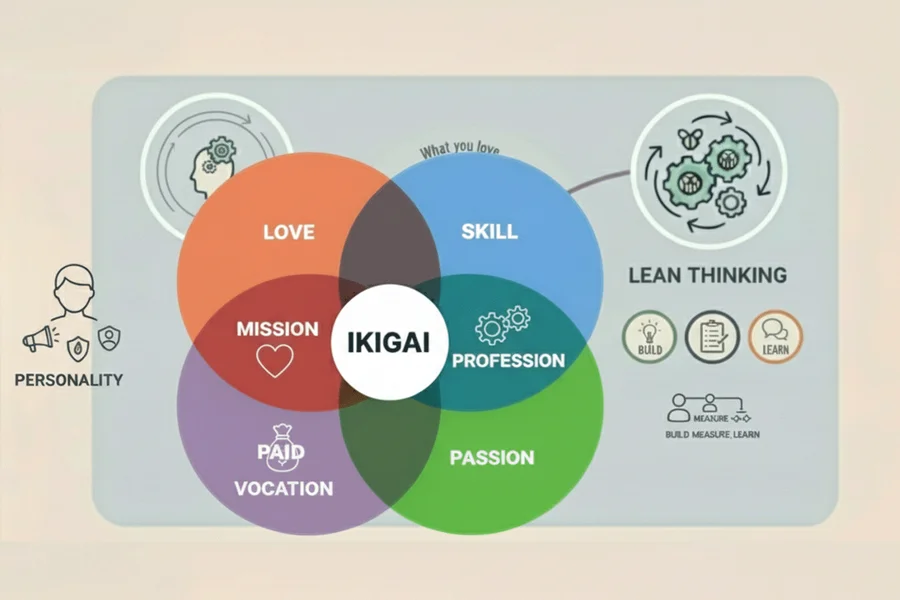
Ikigai isn't some lofty, unattainable ideal; it's found at the practical intersection of four key, overlapping elements. Think of it as a four-circle Venn diagram:
What you love: Your deep passions, the activities and subjects that energize and excite you.
What you are good at: Your skills, talents, and unique strengths (often informed by your personality).
What the world needs: A genuine, pressing problem you can solve or a societal need you can address.
What you can be paid for: A viable financial model that ensures your venture is sustainable and can grow.
For solopreneurs and founders, discovering and aligning with your Ikigai provides immense, intrinsic motivation, deep resilience, and a clear sense of ethical direction.
Ikigai as a Strategic Filter
A purpose-driven founder uses their Ikigai as a strategic filter to select their market, product, and mission.
Problem Identification: Instead of chasing a fleeting trend, the Ikigai-driven founder identifies a meaningful problem worth dedicating their energy to (What the world needs $\cap$ What you love).
Authentic Value Proposition: The resulting product or service naturally flows from their unique talents and passions, making their value proposition genuinely distinct (What you are good at $\cap$ What you love).
Sustainable Motivation: This alignment ensures a crucial balance between personal fulfillment and market viability. When the work itself is connected to your core values and passions, the effort required for growth and survival is inherently more sustainable.
Your core values, often intertwined with your personality, play a huge role here. Living in harmony with these values, through your business, is essential for avoiding burnout. A strong connection to your Ikigai acts as a powerful anchor, especially when navigating the inevitable storms of startup life, providing the why that keeps you focused on the how.
The Agile Engine: Core Principles of Lean Startup
With self-awareness and purpose as your compass, the Lean Startup methodology provides your agile vehicle for navigating the tremendous uncertainty inherent in any new venture. Championed by Eric Ries, this approach is a lifeline for resource-constrained ventures, emphasizing speed, efficiency, and relentless customer-centricity.
Lean Startup pivots the traditional, slow-moving "launch and pray" model into a process of continuous experimentation. Its core tenets include:
Minimum Viable Product (MVP): Building the most basic, high-value version of your product or service that allows you to start the learning process. The goal isn't perfection or a full feature set, but to collect the maximum amount of validated learning about your customers with the least effort and investment.
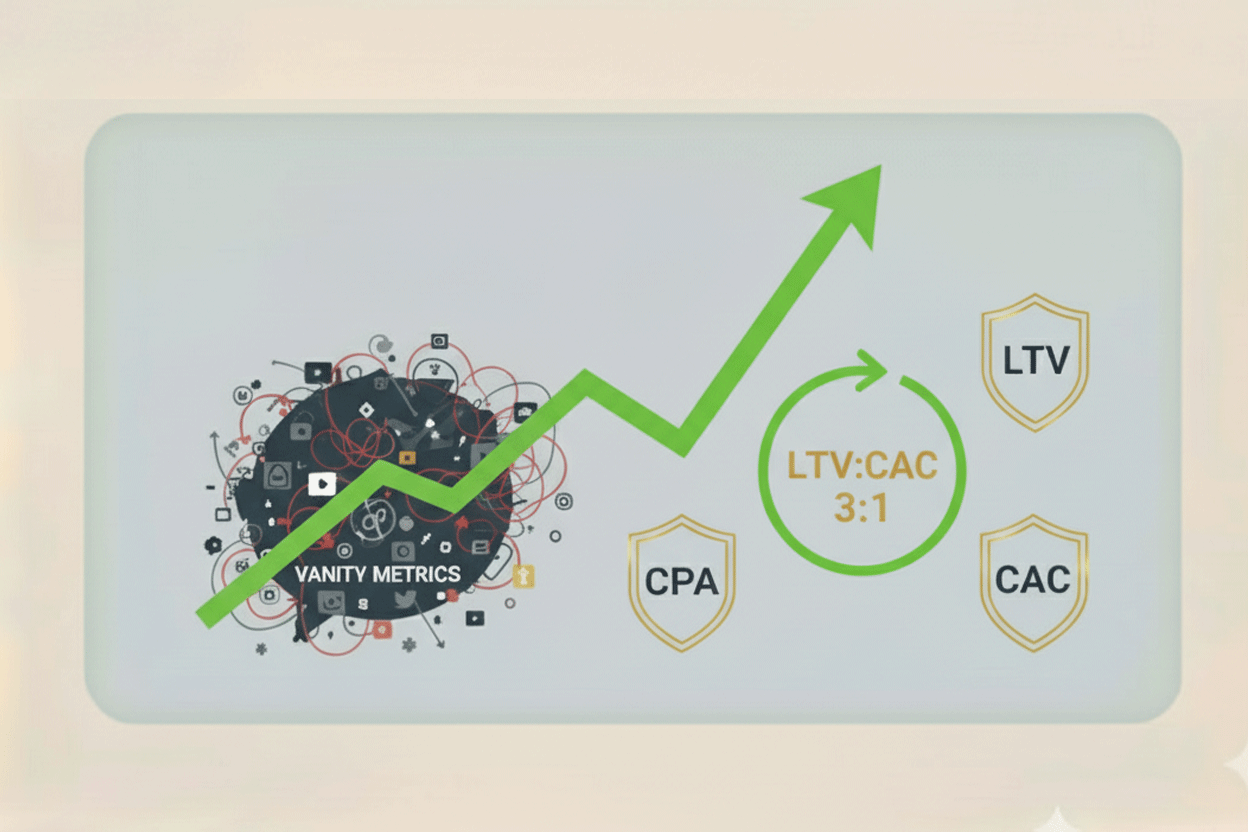
Validated Learning: Progress is measured through rigorous, actionable data and metrics that prove you are solving a genuine problem for customers, not just vanity statistics (like sign-ups that don't convert). This demonstrates real progress in an environment of high uncertainty.
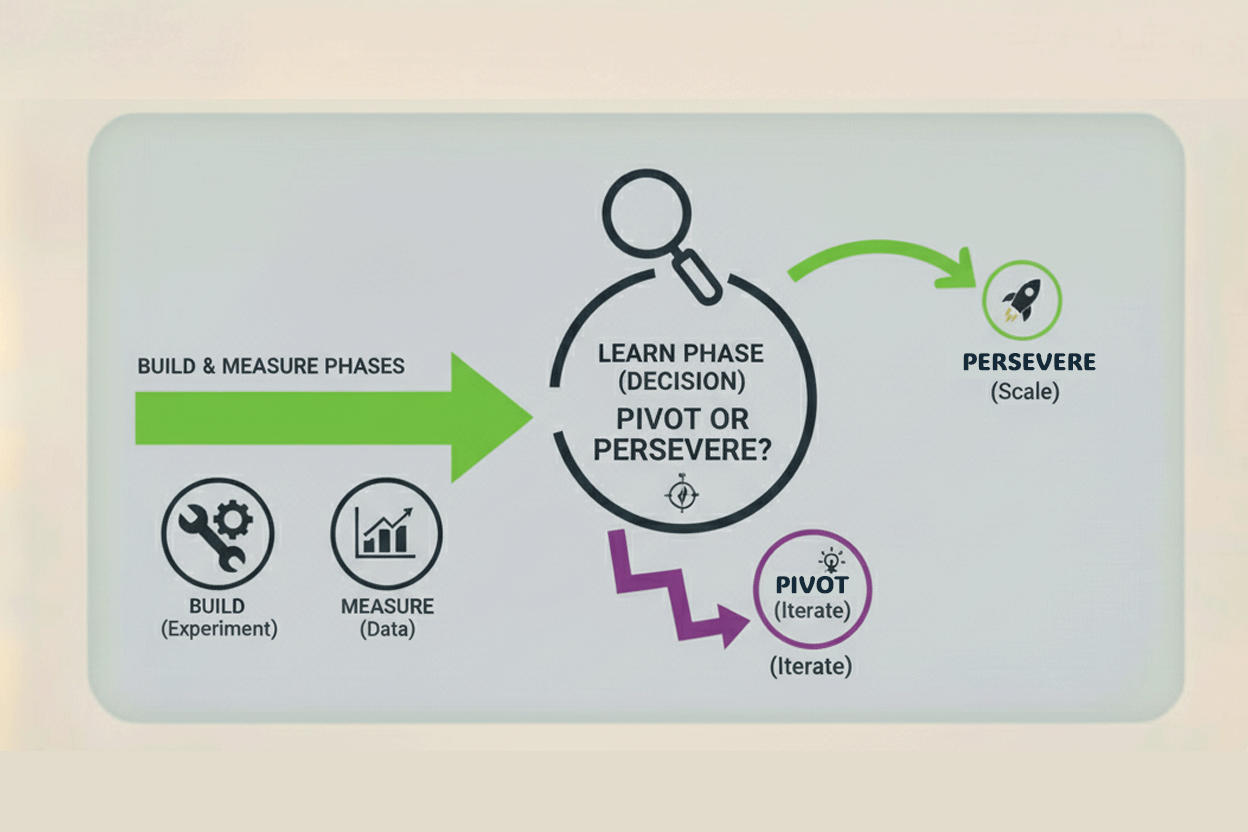
Build-Measure-Learn Loop: This is the heart of Lean Startup—the feedback loop that drives adaptation. You Build an MVP (or a targeted experiment), Measure how customers respond and interact with it, and then Learn from that data to decide whether to pivot (make a significant strategic change) or persevere (continue and refine).
Customer Development: Actively "getting out of the building" (physically or virtually) to engage directly with potential and actual customers. This is crucial for deeply understanding their problems and needs before you invest heavily in building a premature solution.
Iterative Development: Embracing flexibility and being willing to make changes based on what you learn. The core belief is that the initial idea is merely a set of untested hypotheses; continuous improvement and hypothesis testing are key.
The Integration Advantage: Tailoring Lean Startup to Your Unique Self
The real magic, the true path to a sustainable and fulfilled venture, happens when you consciously integrate your personality insights and your Ikigai with the structured, adaptable framework of the Lean Startup. This personalization makes the methodology exponentially more powerful and less prone to the founder's innate biases.
Adapting the Lean Process to Your Profile
MVP Development vs. Personality:
If your personality leans towards detail-orientation (perhaps an ISTJ or Enneagram Type 1), you might naturally build a very thorough, potentially over-engineered, MVP. The self-awareness comes in recognizing the need to avoid the perfectionism trap that could delay critical learning. You must set an arbitrary, early launch deadline.
Conversely, an action-oriented, enthusiastic type (like an ESTP or Enneagram Type 7) might rapidly prototype and launch quickly. The self-awareness here is the need to consciously ensure sufficient, unbiased user research backs up the idea before launching and not just jumping to the next exciting feature.
Your Ikigai can also guide what core problem your MVP aims to solve, acting as a filter for feature creep. If a feature doesn't directly serve your reason for being, it gets cut from the MVP.
Personalizing Customer Development & Networking:
An introverted founder (maybe an INTP or Type 5) might find large networking events and "cold calling" draining and ineffective. Lean customer development can be tailored: focus on in-depth, highly prepared, one-on-one interviews, targeted online community forums, or using data-driven surveys—approaches that feel more authentic and effective for that personality.
Extroverts need to remember that customer development is as much about active listening as it is about talking. Their energy might overshadow the customer's input, leading to biased learning. They must consciously work to ask open-ended questions and listen twice as much as they talk.
Informed Decision-Making & Risk Management:
The crucial "pivot or persevere" decision is often where personality bias is strongest. Understanding if you're a "Thinking" (T) or "Feeling" (F) type (MBTI), or your Enneagram type's core fear (e.g., Type 6's fear of uncertainty vs. Type 7's avoidance of failure), helps you approach this decision with more balance. A "Feeler" might cling to a product because they've developed a rapport with a few early users, while a "Thinker" might pivot too quickly, ignoring subtle but positive signals.
Your risk tolerance, heavily influenced by your Big Five traits (like Neuroticism and Openness), will dictate how you set up your experiments. The goal is to design tests that provide objective data to mitigate the subjective influence of your personality.
Navigating Uncertainty with Resilience
Entrepreneurship is a relentless rollercoaster, defined by setbacks and uncertainty. Traits like emotional stability (low Neuroticism) are certainly invaluable. But even more powerfully, a strong, conscious connection to your Ikigai acts as your ultimate buffer.
When an experiment fails, the Ikigai-driven founder doesn't see it as a personal failure or a sign to quit; they see it as validated learning in service of their larger, deeply held purpose. It provides the intrinsic motivation to persevere through tough times and view challenges as necessary opportunities to better serve their reason for being. The Lean process provides the structured way to move forward; the Ikigai provides the non-negotiable will to do so.
Putting It Into Practice: Your Entrepreneurial Canvas
How do you bring this all together practically? Consider creating a personal "Entrepreneurial Canvas" that maps these elements:
Personality Insights: List your top 3 strengths and 3 blind spots from your chosen framework (MBTI, Enneagram, etc.).
Ikigai Core: Articulate the problem you are solving in the world and how it intersects with your passion and skill.
Core Business Hypotheses: List the fundamental assumptions you are making about your customer and market.
Tailored Lean Experiments: Design your Build-Measure-Learn loop experiments specifically to leverage your strengths and neutralize your blind spots. For instance: If you're an extreme extrovert, your experiment must involve a detailed note-taking system to ensure listening; if you're a Type 1 perfectionist, the MVP must launch on the designated date, even if one feature is missing.
Modern tools, from AI-powered coaching to specialized journaling apps, can also be surprisingly helpful, offering prompts for personality identification, guiding you through the questions to discover your Ikigai, explaining Lean Startup concepts, and even suggesting tailored strategies based on your unique profile. Regular, structured self-reflection on how your personality and purpose are influencing your entrepreneurial journey is the key to staying aligned, resilient, and effective.
Embrace Your Unique Entrepreneurial Path: Build a Business That's Truly Yours
Ultimately, there's no single "right" way to build a successful business. The most powerful, sustainable, and fulfilling path is one that is authentically yours. By embracing self-awareness through understanding your Personality, anchoring your efforts in your deep Purpose (Ikigai), and navigating the journey with the adaptive wisdom of the Lean Startup methodology, you create a potent combination.
This integrated approach allows you to tackle uncertainty with greater clarity, unwavering resilience, and measurable effectiveness, building a venture that not only has the potential for market success but also resonates deeply with who you are and the impact you are meant to make. It’s a continuous adventure of discovery, learning, and adaptation – your unique path to making a meaningful and profitable impact.



No comments yet
Be the first to share your thoughts on this article!