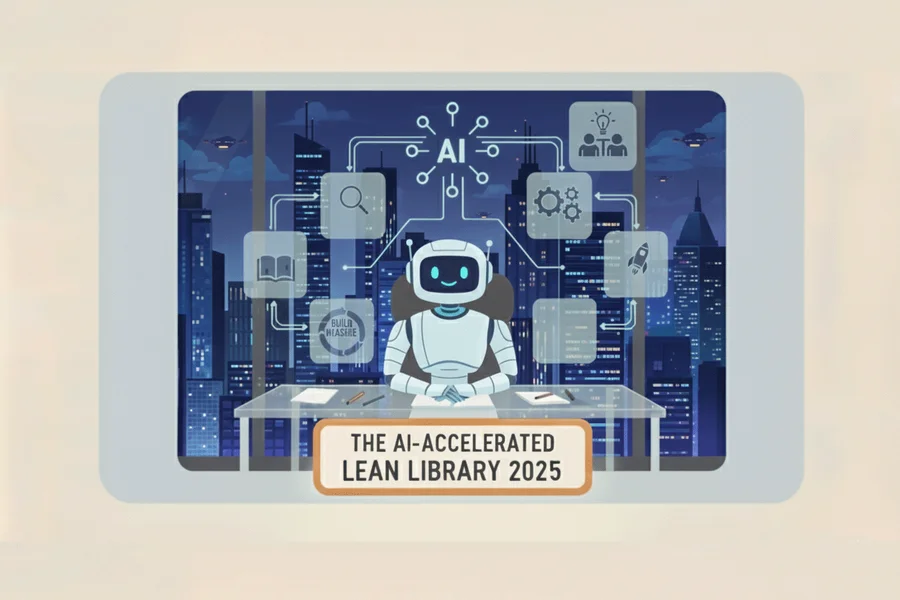
In the brutal, high-stakes arena of modern entrepreneurship, the most common causes of failure remain stagnant: running out of time, running out of money, or, most tragically, building something nobody wants. Against this backdrop, the Lean Startup methodology—a scientific framework for minimizing waste and maximizing validated learning—is the single most vital survival skill a founder can possess.
Yet, the landscape has radically shifted. The challenge is no longer just applying the Lean principles; it is commanding the exponential leverage provided by Artificial Intelligence.
Today’s most effective founder is not just a hustler or an engineer; they are a Superfounder—an orchestrator of AI and automation. They use "vibe coding" (generating functional code through conversational AI prompts) and leverage AI as an "cofounder" to execute tasks that once required a full Series A team. This fusion of rigorous Lean discipline with rapid AI execution has compressed the Build-Measure-Learn cycle from months into days.
This is the definitive guide for operating at this new velocity. We have curated the essential library of Lean classics and integrated them with their modern AI applications, showing you exactly how to transform theory into autonomous, risk-minimizing action.
Why Discipline is the Safety Net for Speed
The cost of developing an MVP has plummeted near zero, thanks to tools like Cursor, Claude Code, GitHub Copilot and other AI coding tools. This speed is a double-edged sword: if you accelerate the development of the *wrong* idea, you simply fail faster.
The classic Lean texts provide the strategic discipline (the "why" and "what to measure"). AI provides the execution speed (the "how fast to build and analyze"). The Superfounder masters both, ensuring that every AI-generated feature, line of copy, and marketing test is a direct experiment against a high-risk business hypothesis.
Here is your reading list, detailed by its foundational lesson and its AI application.
Core Lean Startup Classics—The Philosophy of Accelerated Iteration
These four books establish the scientific, hypothesis-driven model that replaces the traditional, high-risk business plan. AI ensures this cycle runs continuously and autonomously.
Affiliate Note: The links below are affiliate links. We may earn a commission if you make a purchase after clicking, at no extra cost to you.
1. The Lean Startup: How Today's Entrepreneurs Use Continuous Innovation to Create Radically Successful Businesses (Eric Ries)
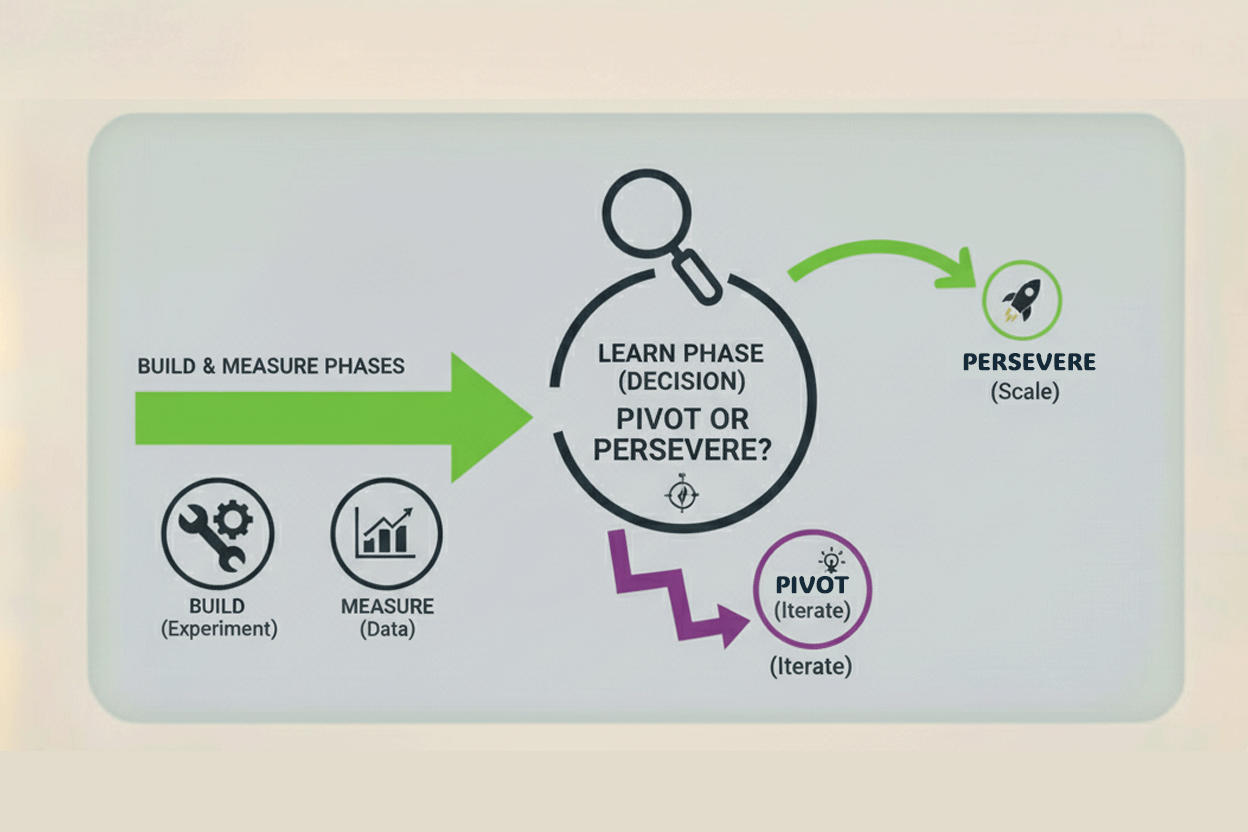
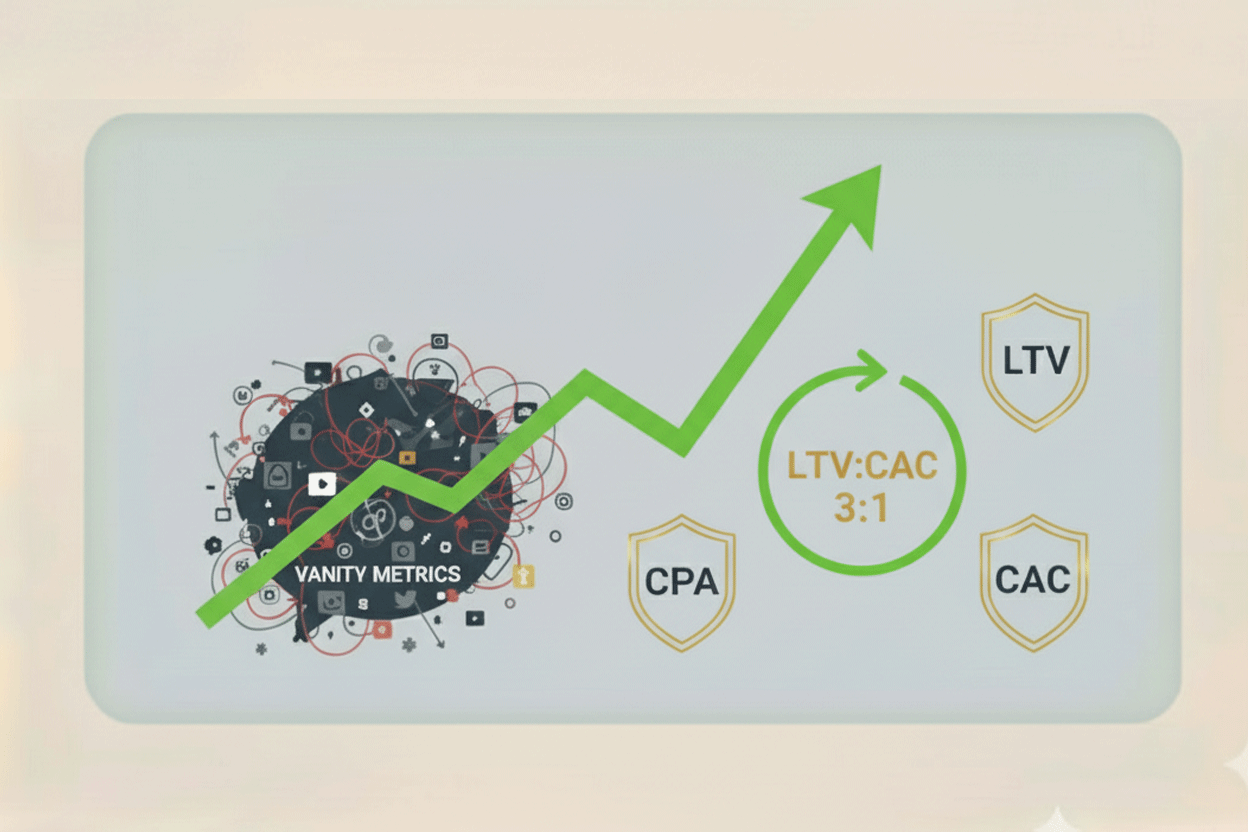
- The Foundational Lesson: The fundamental unit of progress is validated learning, achieved by rapidly moving through the Build-Measure-Learn (B-M-L) feedback loop. You must treat every feature as a grand experiment and focus on actionable metrics over misleading vanity metrics.
- AI Application: Supercharging the B-M-L Loop. AI takes the friction out of "Build" and "Measure."
- Build: Founders use AI-powered landing page builders (like Durable) and generative tools to launch functional MVPs in hours. This compresses the time-to-market so severely that the strategic challenge shifts from *can we build it?* to *how quickly can we test it?*
- Measure: Instead of manual reporting, founders employ analytics platforms with built-in machine learning that instantly highlight performance shifts (anomalies in conversion or retention). The AI handles the "Measure" phase, leaving the human founder to focus solely on the "Learn" phase: Why did the data shift, and should we pivot or persevere?
2. Running Lean: Iterate from Plan A to a Plan That Works (Ash Maurya)
- The Foundational Lesson: The goal is to systematically de-risk your startup by mapping out all assumptions onto the Lean Canvas and prioritizing the riskiest assumptions first, particularly those around problem/solution fit.
- AI Application: Assumption Management and Experiment Generation. The Lean Canvas becomes a dynamic, auditable document. Founders can use ChatGPT, Gemini or Claude to audit their canvas, feeding the AI their problem statement, customer segments, and proposed solution. The AI can then auto-suggest a sequence of high-leverage experiments to test the riskiest box.
- Actionable Example: A founder's riskiest assumption is "Early Adopters will primarily use the mobile app." The AI suggests a low-cost experiment: "Test a web-only MVP for two weeks and track usage via a simple analytics hook. If web usage exceeds X%, pivot the initial development plan away from native mobile." The AI acts as a constant strategic consultant, transforming a one-time planning document into an evergreen experiment backlog.
3. Lean Analytics: Use Data to Build a Better Startup Faster (Alistair Croll & Benjamin Yoskovitz)
- The Foundational Lesson: A startup’s metrics must change as it matures. The book prescribes the single most important "One Metric That Matters (OMTM)" for each of the Five Stages of Startup Growth: Empathy, Stickiness, Virality, Revenue, and Scale.
- AI Application: Eliminating Spreadsheet Hell and Data Noise. AI prevents the modern founder from drowning in the sheer volume of available data. Founders connect their analytics pipelines to AI dashboards that don't just display numbers but interpret them. They receive alerts for anomalies, automated cohort analysis that instantly segments users by LTV or acquisition cost, and generative AI that benchmarks their OMTM against industry competitors. This ensures the limited strategic attention of the founder is always directed toward the most critical bottleneck.
- Actionable Example: An AI dashboard flags a drop in the "Stickiness" OMTM. The AI then automatically analyzes the user journeys of the churned cohort, identifying a correlation with a specific product flow introduced three weeks prior. The founder pivots their development priority instantly based on synthesized evidence.
4. The Startup Owner’s Manual: The Step-by-Step Guide for Building a Great Company (Steve Blank & Bob Dorf)
- The Foundational Lesson: Startups are temporary organizations designed to *search* for a repeatable business model, executed through the rigorous four-step Customer Development Process (Discovery, Validation, Creation, Building).
- AI Application: Automated Process Enforcement and Checklist Management. This comprehensive text is the operating system for the entire Lean journey. AI tools serve as the founder's virtual project manager, enforcing the discipline detailed in the manual. AI chatbots can simulate initial customer interviews for quick feedback on basic premises, and integrated tools can auto-organize all the go/no-go decisions outlined in the book's framework. This prevents the founder, intoxicated by AI speed, from skipping crucial validation steps—the most common reason for failure.
Essential Customer Discovery Books—Humanity in the Age of AI
AI can write code, copy, and automate campaigns, but it cannot replace genuine empathy. These books teach the Superfounder how to maintain the humanity that fuels true innovation, leveraging AI to handle all the logistical noise.
5. The Mom Test: How to Ask Questions that Reveal the Truth about Your Idea (Rob Fitzpatrick)
- The Foundational Lesson: Stop asking for validation ("Do you like my idea?"). Start asking about past behavior and real-world pain ("Tell me about the last time you experienced problem X.").
- AI Application: Bias and Trend Analysis Defense. This book is the solo founder's defense against AI hallucination and confirmation bias. When your AI "cofounder" suggests a feature, this book ensures you use human conversation to validate the *problem* before you vibe code the *solution*. Founders use AI-powered transcription (Otter, Gemini) to record interviews and then use the AI's NLP to instantly analyze transcripts for specific linguistic flags: where did the founder lead the customer? Where did the customer use vague, polite language? The AI acts as a post-interview coach, highlighting moments of bias that a human note-taker would miss.
6. Lean Customer Development: Building Products Your Customers Will Buy (Cindy Alvarez)
- The Foundational Lesson: Customer conversations must be an ongoing discipline integrated into every product sprint—not a one-off phase executed before launch.
- AI Application: Automated Feedback and Synthesis. The Superfounder meets this mandate by setting up continuous, automated feedback loops. They deploy GPT-based survey bots and natural language processing tools embedded directly in the application that gather the "voice of the customer" at scale. This data is categorized and prioritized by AI models (e.g., "login frustration," "pricing confusion"), providing the founder with daily, highly-prioritized customer insights without requiring daily manual effort in logistics and synthesis.
7. Talking to Humans: Success Starts with Asking the Right Questions (Giff Constable)
- The Foundational Lesson: A concise guide that emphasizes the art of the interview: structuring the conversation, listening actively, and reducing uncertainty through real dialogue.
- AI Application: Interview Logistics and Focus. The founder leverages virtual assistants for automated scheduling and uses ML-driven qualitative analysis to summarize findings across multiple interviews. This frees the founder to focus 100% of their energy during the crucial human interaction on active listening and empathy. The AI handles the logistics and documentation; the founder handles the discovery.
8. The Four Steps to the Epiphany: Successful Strategies for Products that Win (Steve Blank)
- The Foundational Lesson: The seminal text that originated the Customer Development methodology, providing the historical and strategic context for the entire movement. It argues that market risk, not technology risk, is the primary threat.
- AI Application: Strategic Alignment. This book informs the macro strategy. AI is used to execute the Customer Creation phase (automated outreach and personalized campaigns) only *after* the human founder has personally validated the Discovery and Validation steps. It ensures that machine speed is never prematurely applied to an unvalidated hypothesis.
Lean for Specialized Startup Needs—AI as Department Automation
Lean is not a monolith. These books show how to adapt the core B-M-L principles to specialized functional domains, with AI now automating the work of entire departments, making the solo founder truly multi-talented.
9. Lean UX: Designing Great Products with Agile Teams (Jeff Gothelf & Josh Seiden)
- The Foundational Lesson: Move away from documentation and static deliverables toward validated outcomes (e.g., increased engagement). Design decisions must be treated as testable hypotheses.
- AI Application: Instant Prototyping and Usability Testing. Design cycles are compressed to hours. Founders leverage Figma AI plugins or Uizard to instantly prototype complex user flows and gather initial usability feedback from virtual or early-stage users. The AI ensures that the focus remains entirely on the design hypothesis ("This new flow will reduce checkout time by 20%") rather than getting bogged down in pixel perfection or lengthy documentation. The founder validates the design *outcome* before committing engineer time to *code* the solution.
10. Lean B2B: Build Products Businesses Want (Étienne Garbugli)
- The Foundational Lesson: B2B demands a specific adaptation of Lean, focusing on securing pilot customers, navigating complex buying committees, and targeting high-value corporate pain points.
- AI Application: Precision Sales and Outreach. B2B sales cycles require high-touch precision. The solo founder uses AI-powered CRM plugins (like HubSpot AI or integrated sales tools) to identify key decision-makers, predict buying signals, and automate hyper-personalized outreach sequences that speak directly to the target company’s validated pain points. This gives the solo founder the reach and precision of a large sales development representative team, focusing human effort exclusively on closing high-value pilot deals.
11. Lean Impact: How to Innovate for Radically Greater Social Good (Ann Mei Chang)
- The Foundational Lesson: Apply Lean to social ventures, focusing on validated social change and impact over simply measuring program activity.
- AI Application: Automated Impact Tracking and Reporting. The difficulty in measuring true social change is solved by AI data platforms that continuously track program outcomes against initial hypotheses across large, messy datasets. AI automates complex reporting for funders and synthesizes learnings across geographies, ensuring that limited resources are deployed where they can have the maximum, proven effect.
Lean Beyond Product—Growth, Branding, and Scaling with AI
The Lean mindset must govern all functions. These books show how to apply iterative, measurable experimentation to the critical areas of marketing, branding, and operations.
12. Lean Branding (Laura Busche)
- The Foundational Lesson: Treat your brand identity—your messaging, tone, and visual style—as a hypothesis that must be tested and refined against real audience reactions.
- AI Application: Rapid A/B Testing of Identity. Generative AI (like Midjourney or DALL-E) produces hundreds of variants of logos, taglines, and messaging instantly. The founder uses these assets to immediately A/B test different brand narratives with real audiences. This rapid iteration on emotional and visual identity allows the founder to converge on a highly resonant brand "vibe" that drives emotional connection and engagement, all before committing to costly, permanent branding decisions.
13. Traction: How Any Startup Can Achieve Explosive Customer Growth (Gabriel Weinberg & Justin Mares)
- The Foundational Lesson: Use the Bullseye Framework to systematically test 19 different marketing channels and find the one that drives explosive growth.
- AI Application: Automated Channel Prototyping. Testing 19 channels manually is impossible. The Superfounder uses AI marketing platforms (like Jasper or other content generators) to rapidly suggest, test, and automate content and campaigns across dozens of channels simultaneously. The AI generates the required assets (SEO articles, ad copy, social media shorts) and the founder uses the resulting data to isolate the single, most cost-effective channel—the "bullseye"—to double down on, maximizing the ROI of every acquisition dollar.
14. Lean Enterprise: How High-Performance Organizations Innovate at Scale (Jez Humble, Joanne Molesky, Barry O’Reilly)
- The Foundational Lesson: Applying Lean principles to organizational structure, technology, and culture to maintain startup agility while scaling into a large enterprise.
- AI Application: Autonomous Operations and Flow Optimization. For the solo founder, the "Enterprise" is their personal technology stack. This book's principles of continuous flow and waste reduction are applied to their AI automation stack. They use enterprise-grade AI automation for DevOps, automated testing, and workflow optimization (via tools like Zapier or n8n) to build an infrastructure that can scale to thousands of users without hiring, essentially becoming an autonomous operations and QA department.
The Superfounder's Accelerated Lean + AI Roadmap
The solo founder must approach this library with the same iterative mindset as their product development. Read to automate and act.
| Stage | Focus Books | Core Strategic Goal | AI Action |
|---|---|---|---|
| Phase 1: Foundations | The Lean Startup, Running Lean | Internalize the B-M-L cycle; identify the riskiest assumptions. | Use AI coding/no-code platforms to prototype; use a Lean Canvas tool for instant mapping. |
| Phase 2: Validation Defense | The Mom Test, Lean Analytics | Eliminate confirmation bias; establish the single OMTM. | Use AI transcription/sentiment analysis for interviews; deploy AI dashboards to define and track the OMTM. |
| Phase 3: Automated Scaling | Traction, Lean UX | Find the "bullseye" growth channel; ensure design is validated by outcomes. | Use AI marketing platforms to test 19 channels; use Figma AI plugins for rapid, outcome-based design testing. |
| Phase 4: Optimization | Lean Enterprise, Lean B2B | Build an autonomous, anti-fragile operational stack that scales without hiring. | Use AI automation platforms (Zapier, n8n) to manage complex workflows, serving as the DevOps/Operations team. |
Conclusion: Lean + AI = The Superfounder Era
The ultimate lesson of the Lean Startup Library is that success is a function of learning speed. AI is not just a feature generator; it is a learning accelerator that has created a new class of entrepreneur—the Superfounder.
These 14 books are no longer theoretical guides; they are playbooks for automation. They provide the human strategy required to manage the exponential speed of the machine. By embracing this fusion, you transform your startup journey from a risky leap of faith into a manageable, iterative process of discovery. Your success depends on your ability to treat every Lean principle not just as a lesson, but as a command to automate, speed up, and de-risk your next action.
Don't just read the next book—read it with the explicit goal of automating its core lesson. Which Lean book and which AI tool will you use for your next experiment? Share your "next test" and lessons learned in the comments!



No comments yet
Be the first to share your thoughts on this article!